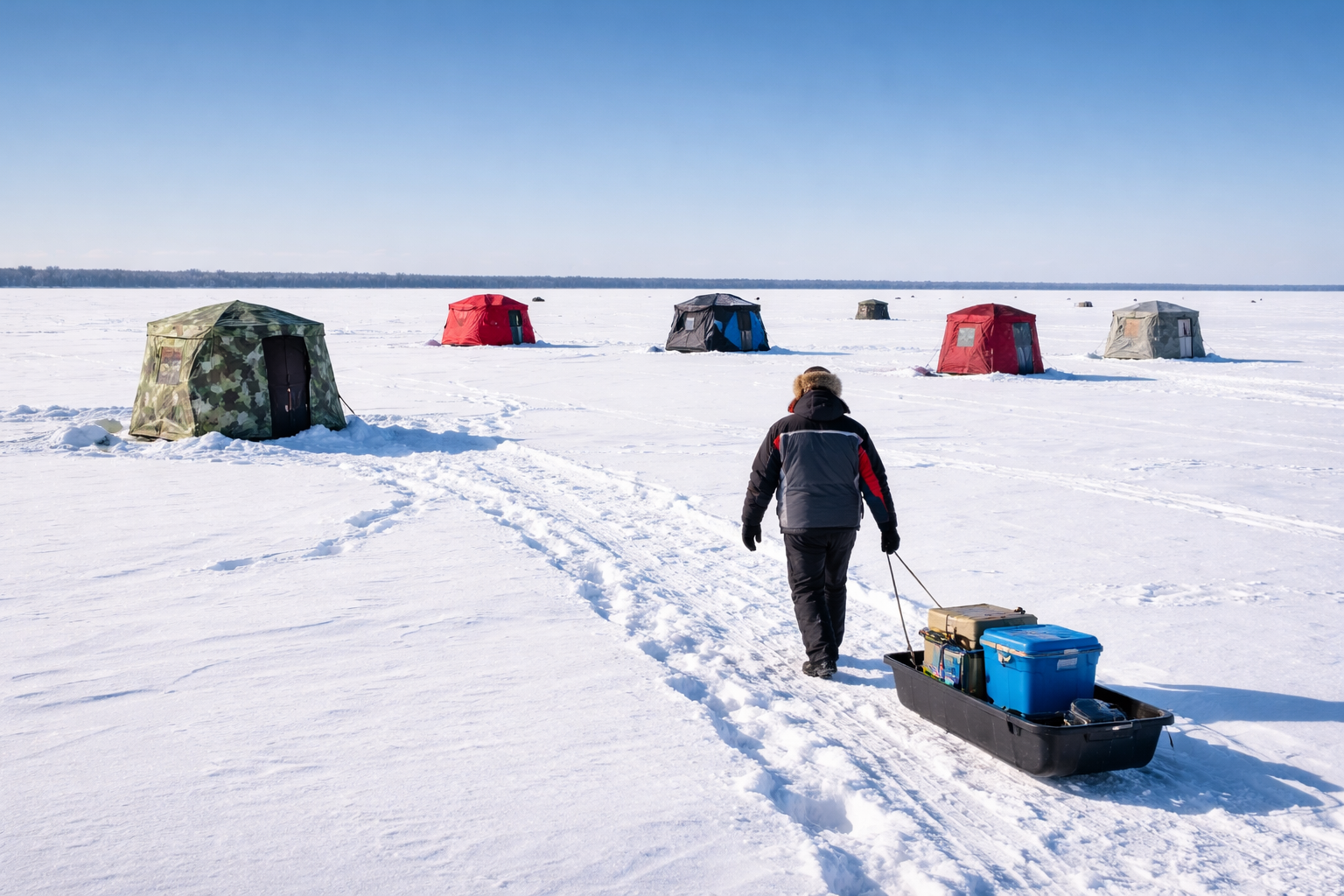
Lake Simcoe has built a reputation as one of Ontario's best-known ice fishing destinations. That reputation attracts beginners, veterans, rental-hut visitors, and serious anglers all at once. The upside is opportunity. The risk is that crowded confidence can trick people into assuming the ice is automatically safe because many others are out there.
Ice does not care how popular the lake is. Conditions vary by weather, access point, current influence, snow cover, pressure cracks, and recent temperature swings. Safe one day does not guarantee safe the next. That has to stay at the centre of every decision.
This guide keeps the focus where it belongs: access, discipline, species expectations, setup, and the simple reality that fish are never worth gambling on questionable ice.
<div class="stat-card">**Layered**<span>Safety gear beats wishful thinking</span></div><div class="stat-card">**Always**<span>Exit plan required</span></div></div>Why Simcoe draws so many anglers
Lake Simcoe offers a mix of species opportunities, established access culture, and winter fishing tradition that keeps people coming back. For many anglers it is the most approachable entry point into Ontario ice fishing because there are known communities, services, and experienced users around the lake.
That accessibility is valuable, but it also creates a false sense of standardization. Simcoe is still a living lake under winter conditions, not a frozen parking lot. Travel lanes, hut zones, and community chatter can help, but they do not replace current local judgment.
The right mindset is to respect the resource, use the available information intelligently, and avoid mistaking familiarity for certainty.
Access points, huts, and choosing how structured your day should be
Some anglers want a fully guided or hut-based experience. Others want to walk out with portable gear and build their own day. Both can work, but the amount of structure you choose should match your winter experience and your ability to assess conditions.
Portable hut setups give flexibility but demand stronger personal discipline around travel, location, and safety. More structured access can reduce uncertainty, especially for newer participants. The main point is not to pretend your experience level is higher than it is.
Whichever route you choose, get current access information before you leave home and again when you arrive.
Species, expectations, and mobility
Simcoe attracts anglers targeting different species and different experiences. Some days reward staying disciplined in one productive program. Other days demand mobility, hole-hopping, and reading where the activity actually is. Your equipment and day plan should reflect that.
Winter anglers often overpack the wrong things and underpack the right ones. Warmth, traction, flotation awareness, navigation, and recovery gear matter just as much as tackle once you are on the lake.
Mobility should always be balanced against the reality of the conditions. Moving more is not automatically smarter if the route or return becomes sketchy.
The ice safety framework that should never become optional
Current information first. Ice picks. Flotation support where appropriate. Communication plan. Weather check. Exit plan. Those are not overcautious extras. They are the baseline of showing up like a responsible winter angler.
Snow can hide weak spots. Temperature swings can change travel conditions quickly. Pressure cracks and localized issues can make general statements useless. That is why serious ice anglers keep validating, not assuming.
If the day starts feeling less stable than expected, leaving early is a successful decision, not a failed trip.
How to think about travel and setup on the ice
Travel should be deliberate. Know your route, mark your landmarks, and keep awareness of weather and visibility. A spot that was easy to access under clear light can feel very different if conditions shift while you are out there.
Once set up, keep the area organized. Winter clutter turns into trip hazards, lost gear, and poor response if something goes wrong. Good setup is part fishing efficiency and part safety.
Also keep your body in the equation. Cold, fatigue, dehydration, and under-fuelling degrade judgment long before people admit it.
Bottom line
Lake Simcoe deserves its reputation, but reputation is not protection. Build the day around current local information, realistic access choice, proper winter gear, and a willingness to leave if the ice picture stops making sense.
What to pack for a smarter winter day
The right winter loadout is mostly about avoiding preventable mistakes. Extra gloves, dry layers, traction, ice picks, navigation support, food, water, and communication tools all deserve space before luxury gear does. Many rough winter experiences begin with small oversights that snowball after a few hours on the lake.
It also helps to think about the trip in phases: travel out, fish comfortably, handle a sudden weather change, then travel back while more tired than you were at the start. If your gear only works for the easy middle phase, the plan is incomplete. Build for the whole day.
That mindset is what separates a casual outing from a properly managed winter operation. You do not need to be dramatic about it. You just need to be honest about how fast winter punishes laziness.
</div>