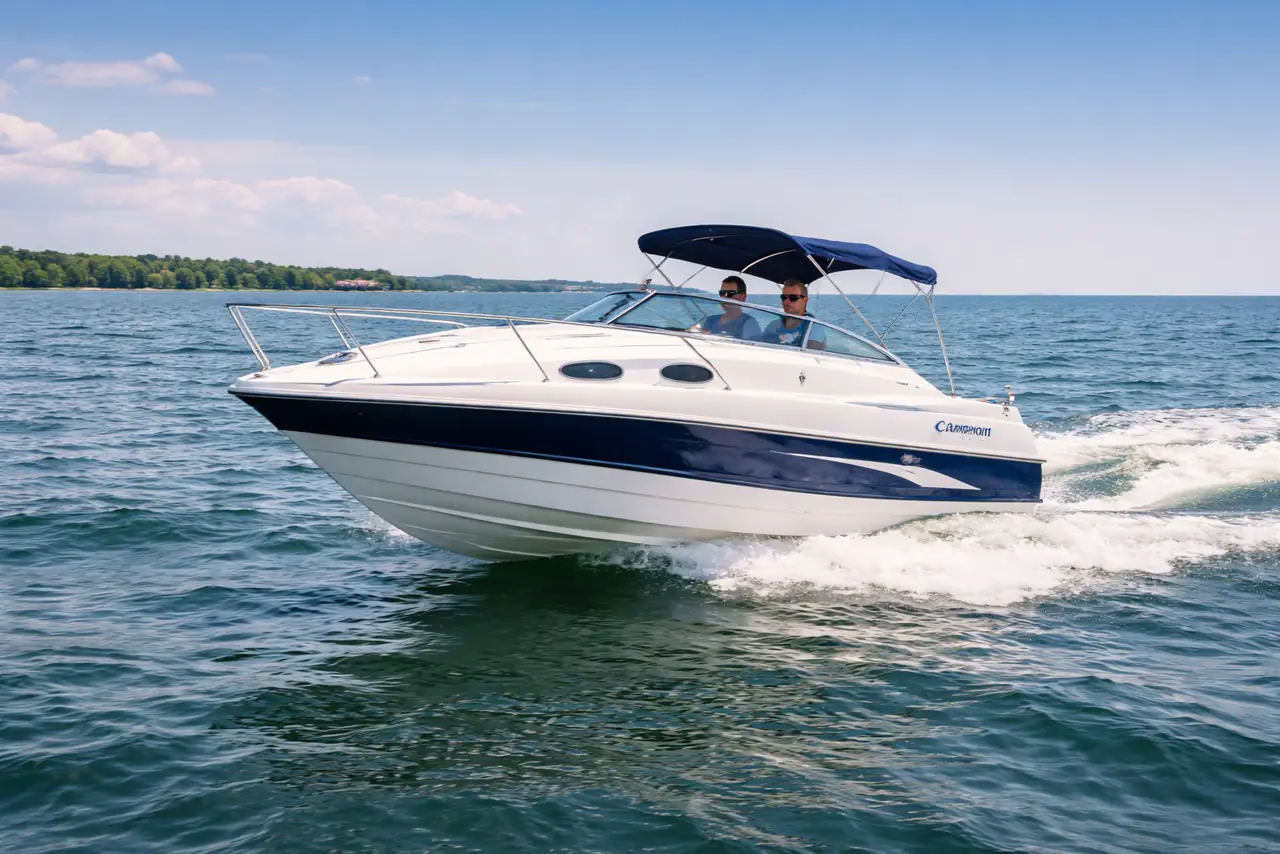
Most new drivers overcorrect because they expect the boat to turn instantly. It does not. You point the bow, wait, feel the hull answer, then make the next correction. When you fight the wheel, the boat starts wandering, the people on board get nervous, and the whole ride feels sloppy. Good steering is not macho. It is measured input, situational awareness, and discipline.
Out here in Ontario, that matters even more because your conditions can change inside one outing. A calm harbour can turn into quartering chop on the open lake. A protected river stretch can become crowded at a bridge opening. Add current, other boats, floating debris, and cold water, and smooth steering stops being a nice touch. It becomes part of staying safe.
Your real job at the helm is simple: keep the boat predictable. Predictable for your crew, predictable for other traffic, and predictable for yourself when you need to make a quick but controlled move. That means understanding three things together: wheel input, throttle input, and trim. Most steering problems are really balance problems between those three controls.
<div class="stat-card">**1-2 sec**<span>Typical response lag</span></div><div class="stat-card">**Zero**<span>Need for panic inputs</span></div></div>Start with the right driving position
Before you even turn the key, fix your body position. Sit or stand where you can see over the bow without stretching, and make sure you can glance at gauges, traffic, and shoreline references without shifting around. A bad stance turns small steering corrections into jerky movements because your body is unstable before the boat is.
Grip the wheel lightly. That sounds trivial, but it changes the whole tone of your driving. White-knuckle steering makes people tense, and tense drivers chase every little movement. A relaxed grip keeps your hands precise. You are guiding the hull, not wrestling it.
Use visual references that are far ahead, not right off the bow. Pick a point on the shoreline, a gap between markers, or a section of open water and steer toward that. When you stare only at the water directly in front of you, you will constantly overreact.
-
Set mirrors and electronics before leaving idle zones.
-
Keep kill switch lanyard on where appropriate for the vessel and situation.
-
Make sure everyone on board knows you are still in learning mode, so nobody distracts the helm.
Understand what the hull is doing after you turn the wheel
The biggest mental adjustment is that the boat keeps moving in the old direction for a moment even after you turn. That delay is normal. The hull has momentum, the water has resistance, and sometimes wind or current is already pushing from the side. If you add a second hard input before the first one has time to work, you create a snake pattern.
Good operators make a steering input, count a beat, and read the result. Did the bow start to come around? Did the stern drift wider than expected? Did the chop push the hull off line? That tiny pause is where the decision happens. It keeps the boat smooth.
On many recreational boats, steering tightens up with some throttle because the prop wash and water flow over the hull improve response. That does not mean speed solves everything. It means controlled forward momentum often helps the boat answer the wheel more cleanly than dead slow wandering.
Bow, stern, and pivot awareness
New boaters focus only on the bow because that is what they can see. The stern matters just as much. In a turn, the stern sweeps wider than people expect, which is why boats clip docks, marker posts, and other hulls during beginner mistakes. When you picture the stern path at the same time as the bow path, your steering decisions improve fast.
-
Bow points where the boat wants to go.
-
Stern swings through space you still need to clear.
-
Pivot point changes with speed, hull design, and throttle.
Use throttle and steering together, not as separate jobs
A lot of rough driving comes from treating the wheel as direction and the throttle as speed. In practice they work together. More throttle can tighten response, but it also increases the consequences of a mistake. Less throttle gives you time, but if you go too slow in wind or current you lose authority. Your job is to find the middle where the hull still listens.
When you want a clean, deliberate turn, set a modest, steady throttle first, then feed in smooth wheel. If you keep changing throttle while also turning the wheel, the hull feels unsettled and your passengers feel every sloppy decision through their feet.
In marinas and no wake zones, small bursts of throttle are often more useful than constant idle wandering. A controlled nudge of power, followed by neutral and correction, can give you far more command than endless low-speed drift. That is one reason experienced operators sometimes look slow but never look weak.
-
Steady throttle creates steady steering feel.
-
Too slow can mean poor control in wind or current.
-
Too fast removes your margin for error.
Trim changes steering feel more than many beginners realize
Trim affects bow attitude, hull contact, and how the boat rides over chop. It also changes steering feel. When the bow is trimmed too high, the boat can feel loose and less planted. When it is trimmed too low, you may get more drag, more spray, and a heavier, less efficient ride.
On flat water, trim out gradually until the boat feels freer without getting squirrelly. In chop, you often trim down a touch so the bow stays more controlled and the hull lands better. There is no macho prize for the highest trim angle. The right trim is the one that makes the boat track well and ride clean.
Do not chase trim every ten seconds. Make a change, feel the result, then leave it alone if the boat is happy. Good helmsmanship is full of pauses. Those pauses are where learning happens.
How to steer in a straight line when wind and current are pushing
Straight does not always mean wheel centred. On a windy day or in a current, you may need a small angle of correction just to hold your line. Think like a pilot. You are crabbing slightly against the force that is trying to push you off your intended track.
That is why shore references matter. If your target is drifting left in the windshield, make the correction early and small. Waiting until the boat has already wandered far off line forces a bigger move, and bigger moves create the oscillation you were trying to avoid.
When another vessel passes and throws wake at you, resist the urge to make a dramatic turn away. Quarter the wake at a controlled angle, keep enough power to stay in command, and steer through it. The boat likes confident structure, not last-second panic.
A practical Ontario mindset
Great Lakes water can stay cold even when the air feels forgiving. That changes the risk profile. Steering mistakes that would be embarrassing on a hot shallow inland pond can become serious fast when you are farther offshore, in traffic, or in a cold-water shoulder season. Respect that difference every time you leave protected water.
Turning, crossing wake, and running in chop
When you turn at speed, the boat banks, loads the hull differently, and throws weight around the cockpit. Warn passengers before sharper manoeuvres and keep the deck clear. A clean turn feels like one smooth arc, not two or three correction bites.
In chop, it is rarely smart to drive perfectly straight if the wave angle is beating the boat up. Sometimes the smoothest path is a slight angle that softens impact and keeps the hull happier. You are allowed to drive for comfort and control, not just the shortest line on a map.
Crossing wake is the same story. Reduce enough to stay composed, keep your wheel deliberate, and meet the wake with an angle that protects the hull. A beginner who tries to prove toughness usually just proves they can scare the passengers.
-
Warn crew before aggressive course changes.
-
Secure loose items before crossing rough water.
-
Use angles to manage impact instead of forcing a straight line.
What to practise on your next outing
Go to open water with room around you and do deliberate drills. Hold a straight line toward a shoreline reference. Make a gentle turn and count how long the hull takes to answer. Run at a moderate speed and adjust trim in small steps until you feel the sweet spot. Then come off plane smoothly without throwing everybody forward.
Next, practise slow-speed steering with intent. Make one correction, then wait. Add a little throttle, then neutral. Watch what the stern does. These are not glamorous drills, but they are exactly what makes a driver look composed at the dock later.
The goal is not to become fancy. The goal is to become boring in the best way. A well-driven boat looks almost uneventful from the outside, and that is exactly why experienced passengers relax.
Final steering checklist before you call yourself comfortable
If you can point the boat accurately, hold a line in crosswind, trim for cleaner running, and stay smooth when wake shows up, you are building real competence. If you still find yourself sawing at the wheel, staring too close to the bow, or reacting emotionally when the boat drifts, keep practising before you crowd yourself into tighter places.
Confidence should come from repetition, not ego. Boats punish ego. They reward operators who stay observant, make measured inputs, and know when conditions are no longer worth forcing. That is the mindset that lasts for years.
-
See farther ahead than the bow.
-
Steer with patience, not constant correction.
-
Blend throttle, trim, and wheel into one calm system.
-
Back off when the water stops giving you margin.
</div>