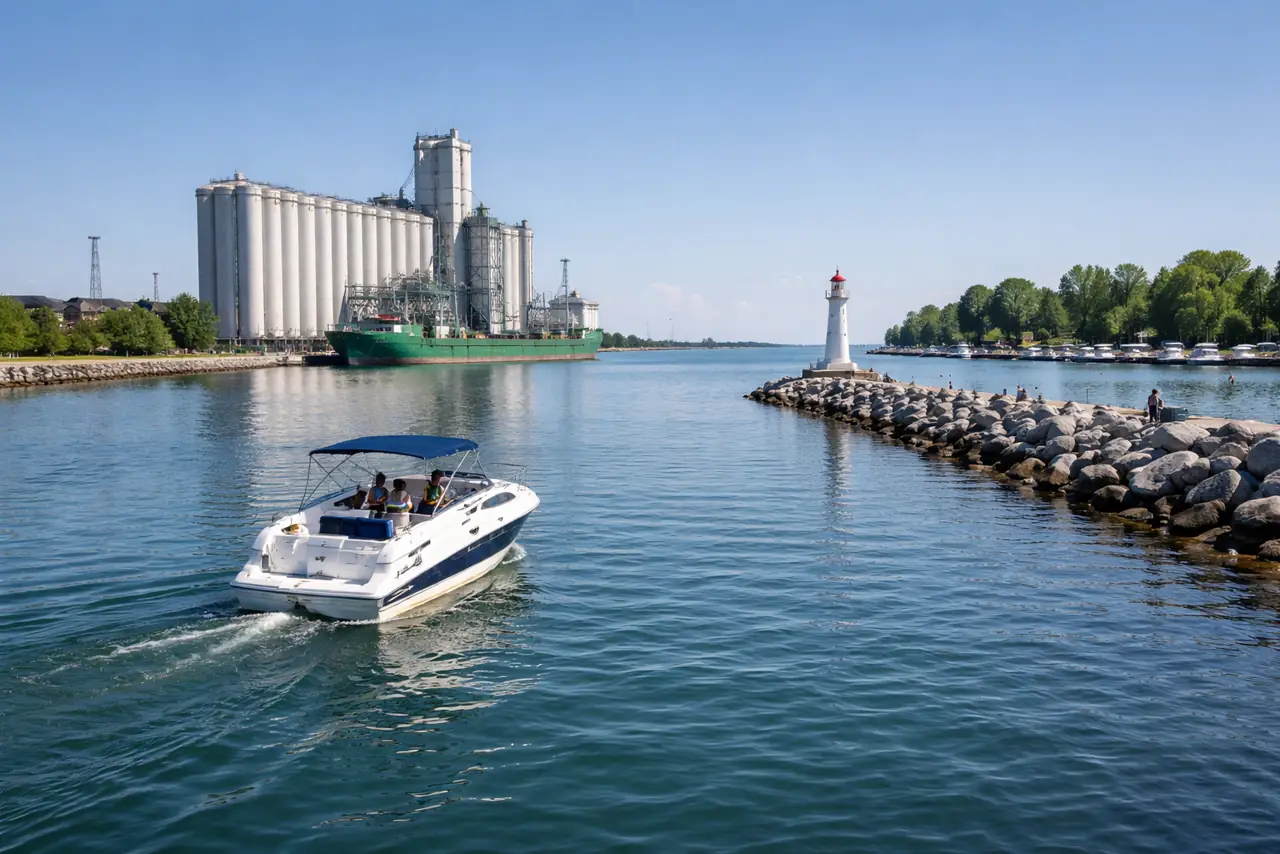
The Niagara River is one of those places where the fishing and the boating are fully tied together. You are not just casting at bass. You are working current seams, structure, traffic, drift control, and positioning. That combination is exactly what makes the river so rewarding and so unforgiving of sloppy boat handling.
Strong smallmouth opportunities have made the river a magnet for serious anglers, but good fishing does not cancel the need for caution. Current can move the boat faster than a beginner realizes, and distracted casting near hard structure or traffic lanes creates risk quickly.
The right approach is controlled and intentional. Choose your water, understand how the current is shaping fish position, and stay honest about what your boat control can actually support.
<div class="stat-card">**Position**<span>Often more important than lure talk</span></div><div class="stat-card">**Constant**<span>Need for boat awareness</span></div></div>Why the river sets up so well for smallmouth
Current, bait movement, rock, seams, and changing depth all create the sort of feeding positions smallmouth love. That is the upside. The downside is that the same ingredients also demand more from the operator. If the boat is not positioned right, your presentation is wrong before the lure lands.
Good river anglers think in relation to the flow. Where is the softer water? Where does the seam sharpen? Where is the break line fish can use without burning energy? These questions matter more than chasing random waypoints.
The river rewards anglers who can repeatedly put the boat in the correct lane and hold there or drift through it cleanly.
Boat control before bait talk
If you cannot manage your line through the current correctly, the lure choice debate is mostly noise. Boat angle, drift speed, and distance from the target shape presentation more than many anglers want to admit.
Use the trolling motor or boat positioning tools with purpose. Do not fight the river in big emotional bursts. Small corrections and foresight keep the drift natural and the cast angle useful.
When multiple anglers are aboard, agree on the drift line and casting zones early. Random crossover chaos wastes water and creates safety issues with hooks under current pressure.
Seasonal patterns and how they change positioning
Smallmouth on the Niagara shift with temperature, forage, current mood, and pressure. That means the exact productive positions can evolve through the season. Sometimes fish set up aggressively on classic current breaks. Other times they slide or spread enough that the old obvious spots are only part of the answer.
The common thread is that current-driven positioning still dominates the decision tree. Start there, then adapt your depth and pace accordingly. A productive area is really a productive relationship between current, structure, and food.
That is why random bank-hopping without reading flow often underperforms disciplined seam fishing.
Traffic, commercial awareness, and courtesy
The Niagara corridor is not a private bass pond. Recreational traffic, tour operations, and other users all need room. Respecting that reality makes the day smoother and safer. Do not assume every other vessel can or will react quickly to your fishing line.
Keep drifts predictable and stay clear of obviously sensitive transit areas. If you are operating near any commercial or controlled zone, give more room than you think you need. Current reduces everybody's reaction window.
Courtesy on a productive drift often protects future access and avoids the kind of tension that wrecks the whole session.
Regulations and the habit of verifying them
River fishing can include special seasons, sanctuary zones, size rules, and local management details that are not worth guessing about. Check current regulations before the trip and treat that as non-negotiable prep.
It also helps to review any local boating notices, closures, or temporary conditions that might affect where and how you fish. River systems can change operationally faster than people assume.
Strong fishing culture includes strong legal habits. The two should travel together.
A practical Niagara River fishing day
Launch with a boat-control plan, not just a tackle plan. Start with obvious current-related structure, make your drifts readable, and adjust based on fish position instead of emotional hopping. Keep one eye on traffic and one on the water movement at all times.
If the current, weather, or crowding starts making your positioning unreliable, simplify. Shorter drifts, fewer variables, more conservative spacing. Precision usually beats aggression here.
The anglers who keep catching over time are often the ones who treat the river as something to work with, not dominate.
Bottom line
Niagara River bass fishing is a boat-control fishery. Respect the current, fish the seams with purpose, verify current regulations, and keep the whole day inside a level of precision your boat and crew can actually support.
Gear discipline and river etiquette
River bass days go smoother when the deck stays simple. Keep only the tools and tackle you are actively using close at hand, and keep the rest organized so hooks, nets, and loose rods do not become hazards when the boat shifts or a fish surges beside the hull. A cluttered river deck is not just annoying. It directly interferes with safe, precise positioning.
Etiquette matters too. Do not burn through another crew's drift line because you are excited about a seam. Give room, communicate through obvious positioning, and remember that productive water is still shared water. Respect tends to come back to you over a season. So does sloppy behaviour.
That same discipline extends to fish handling, camera time, and release quality. Good river anglers leave the spot looking like responsible users, not like they treat the system as disposable.
</div>